A Childhood

A Childhood

Harry Crews

Harry Crews

“One of the Finest Memoirs Ever Written” –The New Yorker The highly acclaimed memoir of one of the most original American storytellers of the rural SouthA Penguin ClassicHarry Crews grew up as the son of a sharecropper in Georgia at a time when “the rest of the country was just beginning to feel the real hurt of the Great Depression but it had been living in Bacon County for years.” Yet what he conveys in this moving, brutal autobiography of his first six years of life is an elegiac sense of community and roots from a rural South that had rarely been represented in this way. Interweaving his own memories including his bout with polio and a fascination with the Sears, Roebuck catalog, with the tales of relatives and friends, he re-creates a childhood of tenderness and violence, comedy and tragedy.  
Read online
  • 700
The Gospel Singer

The Gospel Singer

Harry Crews

Harry Crews

“Harry Crews is magnificently twisted and brutally funny.” - Carl HiaasenA Penguin Classic Golden-haired, with the voice of an angel and a reputation as a healer, the Gospel Singer appeared on the cover of LIFE and brought thousands to their knees in Carnegie Hall. But for all his fame, he is a man in mortal torment that drives him back to his obscure and wretched hometown of Enigma, Georgia. But by the time his Cadillac pulls into Enigma, he discovers an old friend is being held at tenuous bay from a lynch mob. As Harry Crews’s first novel unfolds, the Gospel Singer is forced to give way to his torment, and in doing so he reveals to the believers who have gathered at his feet just how little he is God’s man, and how much he has contributed to the corruption of each of them. 
Read online
  • 691
Karate Is a Thing of the Spirit

Karate Is a Thing of the Spirit

Harry Crews

Harry Crews

One morning a young wanderer wakes up to see a band of karate students engaged in deadly combat. Seduced by the sheer impossibility of their feats, and by the stunning female brown belt in their midst, he is soon absorbed into their world—in which the spirit of karate supplants all else. “A fitting celebration of man’s search for absolutes . . . [Crews’s] subject is man in the microcosm of the freak show, a performer in a species of southern Gothic carnival where the only salvation is his continuing erratic quest for The Way and The Way is as dark and elusive as the picaresque surroundings are bright. . . . Karate Is a Thing of the Spirit is an intense and dazzling book.”—Maxine Kumin “The novel takes off, in the manner of a fire storm, rushing at amazing speed, eating up the oxygen, scorching everything it touches. . . . [Crews’s] stock in trade is the unexpected. His humor produces something between a laugh and a gasp, and he writes with a hand as sure, tough and trained as [a black belt’s] destructive paws. He is always on his own, absolutely sure of himself, and very good.” —The New York Times Book Review Acclaimed as “a comic novelist of magnificent gifts” (National Review), a “verbal alchemist” (Kirkus Reviews), “a natch’ral bom teller of tales, a spinner of dreams” (Los Angeles Times), and “amadgenius” (Dan Wakefield), Harry Crews has been a student of the martial arts and is the author of ten books including Car and A Childhood: The Biography of a Place. He lives and teaches in Florida.From Kirkus ReviewsHarry Crews is a verbal alchemist whose plots can leave you hanging your hat on the outer reaches of insanity and calling it home. Someday someone will be forced to write a thesis on him. In an attempt to bring it all together -- his excesses -- John Kaimon "got very little sleep because the members of the motorcycle gang circumcised him, raped his mouth, anus and armpits and did some other things to him that he had never thought of"; and his simplicity: "I don't know what this place is like around here, but I've found in most cities people'll give you for a day's begging about what you could make for a day's work. I mean I usually make about sixteen dollars for an eight-hour beg." In reluctant summation this plot is about Faulkner fan John Kaimon getting mixed up with the Ultimate Tranquility group, an "Outlaw" Karate set that worships "Jefferson Davis Munroe" (the midget protagonist of This Thing Don't Lead to Heaven) and especially Gaye Nell Odell, a brown belted beauty who divides her time between Kartekas and Beauty Contests and who teaches in a dried out swimming pool in an abandoned motel. But that's not even the beginning, middle, or end. . . . Mr. Crews is a master of the uncommonplace and consistently fascinating.
Read online
  • 667
Where Does One Go When There's No Place Left to Go?

Where Does One Go When There's No Place Left to Go?

Harry Crews

Harry Crews

“What I want you to do is turn around now and walk back out again,” Harry Crews said, “because I don’t write science fiction. Don’t read it. Can’t bear it.”“We never said you did,” said the Gospel Singer.“But this is close. This is getting mighty close.”Anchoring this volume of Crews rarities, the novella Where Does One Go When There's No Place Left To Go? pits Crews himself against a handful of his most desperate creations. The Gospel Singer and Didymus; Fat Man (from Naked in Garden Hills); Belt (Karate is a Thing of the Spirit); Herman Mack & Margo (Car), and maniacal enthusiast Duffy Deeter (All We Need of Hell) have come calling on their creator, escaping their own fictions to settle up with the architect of their indvidual miseries. How do they go about this? Take him to Disney World, of course.Also included are the only four short stories Crews published in his lifetime - three formative and foundational entries from the early 1960s and a tale of erotic horror commissioned by editor Ellen Datlow in 1994 - as well as the novella The Enthusiast and Crews' only stage play, the semi-autobiographical Blood Issue.
Read online
  • 605
The Gypsy's Curse

The Gypsy's Curse

Harry Crews

Harry Crews

The novels of Harry Crews have consistently been praised for their mysterious and convincing grasp of the recognizably human feelings that lodge amidst the demonic and the strange, in what the New York Times Book Review has called a "Hieronymus Bosch landscape." Here, his remarkable talents bring us even further into the realm of unexpected emotional possibilities—leaving us moved, even almost charmed rather than horrifed, by the dreadful and implacable fulfillment of "The Gypsy's Curse." From Kirkus ReviewsIt's not anybody who could write a bawdy, often hilarious, totally unsentimental novel about a legless deaf-mute who earns his keep by doing one-finger stands on arms the size of your average giant's thighs. Marvin Molar lives in a gym with Al -- a former stunt man who did tricks like having a car run over his body -- an old punchdrunk Negro fighter named Peter and an equally punchy young one named Leroy -- and finally, Hester, a "normal" whose revolving thighs drive Marvin absolutely insane. She is the "gypsy's curse" ("Find a cunt that fits you and you'll never be the same") -- especially when she abandons Marvin for an occasional fling with her former lover Aristotle -- the kind of dumb Greek spic Marvin particularly dislikes. But he stands it, at least for awhile, both because Hester gives him nightly bliss and because she charms everything but the pants off his other gym pals -- all the while subtly but purposefully sowing seeds of disaster that will result in the splitting apart not only of their semi-family but of her pretty little head. The novel is narrated by Marvin, who can reel off tough-sounding detective patter with the best of them -- and then some.
Read online
  • 554
Celebration

Celebration

Harry Crews

Harry Crews

Now from the author the Washington Post Book World calls "the dark chronicler of human vanity and folly" comes Celebration. The newest black comedy from Harry Crews is a biting, brilliant commentary set in a Florida rest-home gulag where the over-sixty-five set checks its dignity, self-esteem, and social security numbers at the door.Forever and Forever is the aptly named retreat, populated by a motley crew of forgotten wives and ruined men who are waiting for death while working on their tans. The leader of this group is Stump, whose lost arm paid for Forever and Forever, and who believes the silent desperation that infuses the trailer park masks the fact that Forever and Forever is truly a small piece of hell on earth.This ironic silence is shattered by the entrance of a beautiful young bombshell. Too Much is her name, and that is exactly what she is. This walking bonfire awakens long dead appetites in the inhabitants of Forever and Forever, reminding them of what they once were and can be again -- alive."Dark and sometimes shocking ... Wonderfully ribald and deeply humame." —Gary Dretzka, Chicago Tribune “Crews is at his giddy, twisted best.” —Entertainment Weekly “Shards of brilliance and of the gonzo wit that has made Crews’s reputation as a dead-on satirist.” —Karen Karbo, The New York Times Book Review “... a tribute to individuality and yes, to celebrating life.”—The Charlotte Observer "...another savage satire with the usual Crewsian elements: grotesque characters, bizarre situations, and black humor." —Library JournalFrom BooklistCrews is a Rabelaisian satirist who toys with the more gothic aspects of southern literature, particularly in this kinky tale. Readers will know that they've entered the realm of the absurd as soon as they meet Too Much, a flexible and lusty beauty right out of Lil' Abner, tight cutoffs, big boobs, and all. Too Much descends on a Florida trailer park called Forever and Forever like a hurricane, riling everyone at this purgatory for old folks who are too raggedy to enjoy retirement but not quite broken down enough for a rest home. Too Much easily seduces Stump, the bitter, one-handed vet who owns this depressing settlement, then unceremoniously deposes him while stirring up long-forgotten appetites in the Old Ones, with her five-alarm body and nihilistic faith in what she calls the "chance of ultimate possibility." Crews is funny, his plot is nearly surreal, and his playing with our notions of good and evil is clever and entertaining, but this is, at base, a very silly novel. —Donna Seaman
Read online
  • 446
Naked in Garden Hills

Naked in Garden Hills

Harry Crews

Harry Crews

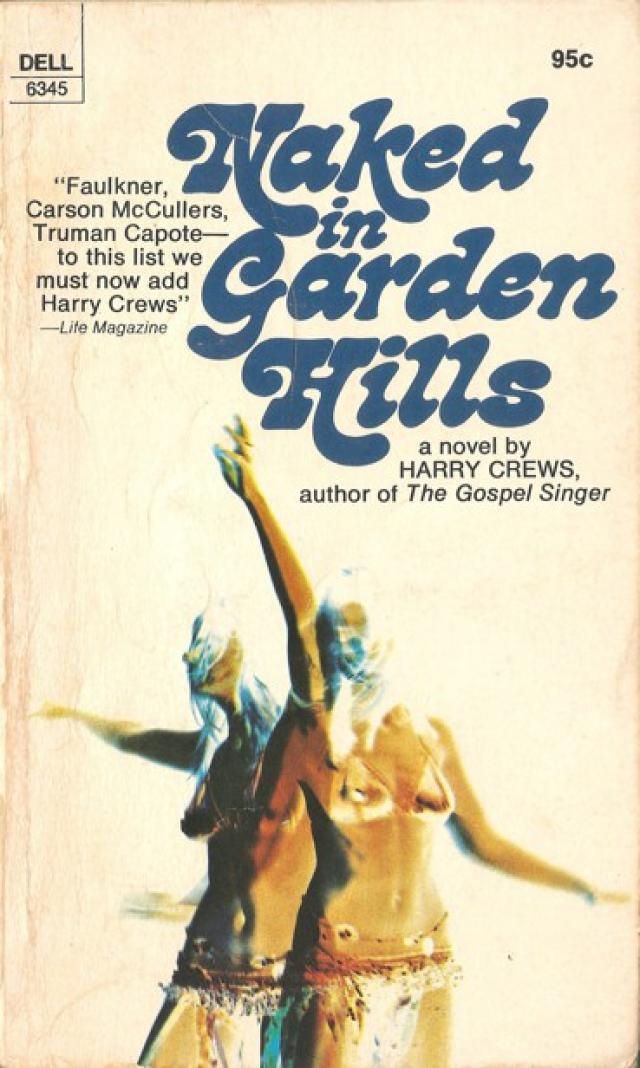
A black jockey with a genius for horses and women ... his white master, a slave to the corrupt needs of his flesh ... an amoral Southern beauty queen, out to seduce and exploit them both.... From this twisted human triangle comes one of the sensational novels of our time—a revelation of passion, perversity and strange hungers."Absorbing and superb!"—Erskine Caldwell“An unforgettable experience!”—Oregon Journal“Macabre and slapstick, howiingly funny and as sad as a zoo, ribald and wry, Naked in Garden Hills lives up to and beyond the shining promise of Mr. Crews' first novel, The Gospel Singer. It is southern Gothic at its best, a Hieronymus Bosch landscape in Dixie.” —Jean Stafford, in The New York Times Book Review “The stage is set with such minute perfection and reality that anyone trying to describe it can only be caught in vague inanities. Garden Hills is a carnival, a freak show that echoes all of life. It is a measure of Mr. Crews’ art that from this world unblemished truth emerges. Ruthless, cruel, blackly beautiful ... as simple and inevitable as sin-brings-punishment and as complicated and intense as human experience ..."—Harper’s“Fine and furious, vibrant and alive ... an important new voice!”—Los Angeles TimesFrom Kirkus ReviewsYou may remember the underground hymn of The Gospel Singer (1968). Mr. Crews again presents an existential freakshow that is delicately crafted and seems to be saying something. . . even if you're never quite sure what it is. He's kind of the Ingmar Bergman of the short novel presenting here Garden Hills, once site of the world's largest phosphate mine, abandoned now to twelve families and the "Fat Man," whose father accidentally became a millionaire. "Fat Man" is a five foot, five hundred pounder when first met consuming crates of Metrecal and still shooting slowly outward. He's taken care of by four feet of perfection, one Jester who was destined to be a jockey but lost his race with fear. "Fat-Man" lives in his castle, benign custodian to the twelve families who are convinced that the phosphate king Jack O'Boylan is going to reactivate the mine so that they can resume their presumably interrupted life pattern. But Dolly, back from New York, knows that O'Boylan isn't coming back and she has plans for turning Garden Hills into the most far out tourist trap ever conjured up by a distorted mind. The plan includes Go Go cages and one particularly sturdy one with trays of steaming food. Mr. Crews has one of the wildest imaginations around. . . you won't be able to put him down.
Read online
  • 376
This Thing Don't Lead to Heaven

This Thing Don't Lead to Heaven

Harry Crews

Harry Crews

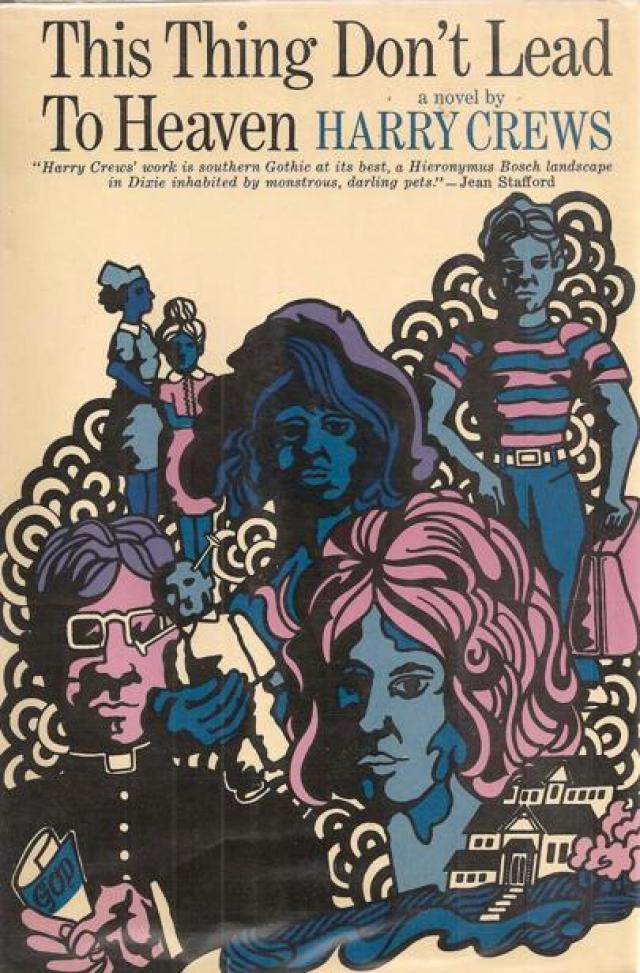
From Kirkus ReviewsMr. Crews' first two novels, The Gospel Singer and Naked In Garden Hills, established him as a superb writer of the absurd. This one has the same bizarre elements. It's set in the "Senior Club," an old people's home run by Axel, an enormous woman dominated by her midget masseur, Jefferson Davis, a dwarf who has convinced everyone that his hands hold the power of life. An accidental newcomer is Carlita, a Spanish-speaking Negro that no one can understand; particularly since her speech is punctuated with voodoo incantations. Jefferson Davis becomes convinced that she can "magic him" to full height. Another arrival is Junior Bledsoe, seller of cemetery plots who struck gold in St. Petersburg and is determined to do the same in the"Club." Every scene is both ridiculous and real, achingly funny and marvelously poignant. The author can make the loss of an old man's last tooth a cameo drama. Unfortunately the ending is abrupt and oddly disappointing. But Mr. Crews is a dazzling, lasting talent.
Read online
  • 369
Car

Car

Harry Crews

Harry Crews

"Everything that's happened in this goddam country in the last fifty years has happened in, on, around, with or near a car."Herman Mack is set to devour a 1971 Ford Maverick, bumper to bumper, half a pound a day, in half-ounce cubes, for a paying audience in the ballroom of the largest hotel in Jacksonville, Florida. His junkyard operating blue collar family isn't having it, but the whole car-crazed country pours in to watch the first bite - and the first "pass" - and if the deals can get signed, and the bomb threats don't pan out, and everything that's exploitable gets exploited, and the entree can be kept sanitary, and the hotel prostitute can apply the ointment, then ... Then the grand sideshow stunt could just pass into legend. Doctors are consulted. TV cameras are brought in, set to broadcast coast-to-coast and beyond. A blowtorch cuts off a piece of the bumper. And it's served up to the ultimate consumer. Money, pride, celebrity, dreams - a myth in the making - are all on the line. Herman Mack grew up cleaning, fixing, selling, salvaging, wrecking, living and breathing cars. But can he really eat one? In Car, the acclaimed author of A Feast of Snakes totals America's all-consuming love affair with the automobile -- purveying his grotesque and farcical iconoclasm in typically Crewsian fashion -- with knife, fork and bared teeth."This book is exceedingly funny, indeed painfully so ... Car has flash after flash of genuine brilliance." -The New York Times Book Review
Read online
  • 343
The Knockout Artist

The Knockout Artist

Harry Crews

Harry Crews

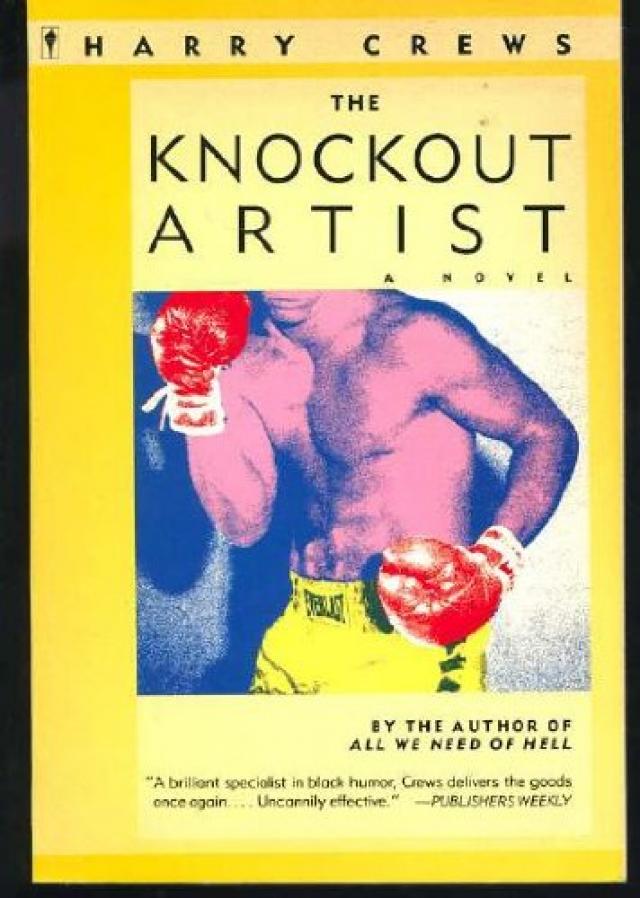
When Eugene Talmadge Biggs leaves rural Georgia to seek his fortune in the wider world, he finds that world at his feet almost too quickly. Eugene, it soon becomes clear, is a boxer of uncommon promise, an athlete of such natural grace, agility, and power that his rise to a championship seems almost unquestioned— until he discovers during a routine match that he has a glass jaw. That jaw is in fact so freak­ishly vulnerable that Eugene realizes he can punch himself unconscious, a skill that he begins to exploit publicly and that quickly brings him notoriety as The Knockout Artist.Harry Crews’s extraordinary new novel is the story of his hero’s career in the New Orleans underworld, whose regulars have long since checked their morals at the door, and where success is measured by how many people are under one’s control. Set loose in this arena, Eugene becomes a sensation, the perfect victim who decrees his own punishment over and over again. As his fame spreads, he is taken up by a mysterious trainer named Jake, a min­ion of a perverse tycoon named Oyster Boy; he is taken in as a lover by Charity, an earnest psychology graduate student for whom Eugene is the perfect subject; he finds himself drawn more tightly into the city’s poisonous orbit of tawdry sex clubs, fantastic deals, and private parties where every whim is indulged. The day comes, however, when Eugene must confront his self-respect, which arrives in the person of an immensely talented young Cajun fighter—an innocent in whom he recognizes something of what he had once been. When The Knockout Artist becomes a role he can no longer play, he sets out to claim his freedom, and wins it in an unforgettable climax.The Knockout Artist is virtuoso Crews—as mordantly funny as it is unflinching in the face of every foible of bedraggled humanity. And, remarkably, it is a story about love as only one of our great writers can present it: often misguided, sometimes destructive, but ultimately the only path toward values that are clear and true. From Publishers WeeklyCrews, one of the most inventive practitioners in modern American letters, returns to a milieu that has long fascinated him: the seedy world of fighters and musclemen. Eugene Talmadge Biggs, ex-farmboy and ex-boxer (he won 13 fights and lost the next four by knockouts), knows an amazing trickhe can knock himself out with one punch to the jaw. Abandoned by his manager, Crews's glass-jawed hero has to support himself by exhibiting his trick at parties. After 73 self-inflicted KO's, the routine gets a little wearing. Meanwhile, Eugene is taken up by Charity, a rich, all-but-the-dissertation Ph.D. candidate bent on constructing a thesis that relates every fact in the world to every other fact. She thinks Eugene and his prizefighting friends are a gold mine of information for this dubious project. A brilliant specialist in black humor, Crews delivers the goods once again. His deadpan prose style is uncannily effective in meshing the surreal and everyday life. While the characters are mainly freaks, they come across so directly, often with an affecting sweetness, that they acquire extraordinary vibrancy. Crews is a modernist all right, but he isn't a facile one. The moral here and elsewhere in his work is old-fashioned: to thine own self be true. Copyright 1988 Reed Business Information, Inc. From Library JournalA superbly crafted novel of deceptions and darkness, this look at the underside of a strange group in New Orleans moves inexorably toward a stunning climax. Eugene Gibbs, a failed boxer, becomes popular on the kinky circuit and is taken in hand by Charity, a wealthy girl who beds him. Eugene is drawn into the circle of another boxer, his addict girlfriend, a hooker/lesbian, and a wealthy businessman who gets his kicks by controlling people by day and being led about with a leash by night. Basically decent, Eugene is tormented because he is deceived and let down by everyone, except a young boxer he is training. Characterization, incidents, and tone are all beautifully sustained in this unusual book. R. H. Donahugh, Youngstown and Mahoning Cty. P.L., OhioCopyright 1988 Reed Business Information, Inc.
Read online
  • 315
An American Family: The Baby With the Curious Markings

An American Family: The Baby With the Curious Markings

Harry Crews

Harry Crews

“God bless Harry Crews, America’s best writer. He’ll break your heart but he’ll always bring you love. They just don’t make’em like this anymore.” -Thurston Moore/Sonic YouthAN AMERICAN FAMILY: The Baby With The Curious Markings is Harry Crews’ most savage and disturbing book yet. Readers of the author’s previous 22 books are in for another shocking and original treat. Make no mistake, this is a raw and powerful novel. Here is Harry Crews at his cranked-up best, at war with the insane crackpots of “the damned human race.”Harry Crews has been praised by writers, critics and readers for nearly 40 years. AN AMERICAN FAMILY demonstrates the full force of his creative powers and reinforces the undying importance of his remarkable literary career.From Publishers WeeklySet in what appears to be the contemporary South, this twisted tale of violence and passion from Crews (The Gospel Singer) focuses on the domestic conflicts facing Major Melton, a former marine and junior college professor. Melton's discovery of an unusual birthmark on his baby son's private parts leads him to suspect his wife of an affair—and to a series of brutal episodes involving pit bulls and a hanging. The odd ending will leave many wondering what the point of it all was. Fans of Southern gothic at its most gruesome will be pleased, but mainstream crime readers are unlikely to be satisfied.From BooklistCrews is one of a select group of writers who have received significant praise from academic literary critics (he has been the focus of about a dozen dissertations and a special issue of Southern Quarterly) and yet can remain confident that their books will be squirreled away in the recesses of public libraries by engrossed teenagers (some of whom grow up to become literary critics). Crews' latest testosterone--fueled trance of cryptic meaning and freakish violence revolves around Major Melton, a marine-turned-English-professor protagonist who finds a suspicious birthmark on his infant son's genitalia and suspects his wife of infidelity. A violent run-in with his in-laws and some pit bulls begins the carnage, which quickly escalates into a grotesquely Freudian revenge fantasy. Between splatters, Crews revisits some familiar themes--scars, dogs, karate, physical pain, regret--and continues the obsessive examination of complicated blood relationships that has defined his career. Although those new to Crews may be shocked by the entire book, his die-hard fans will be shocked merely by the unfamiliar notions of reconciliation that shape its ending.
Read online
  • 286
The Hawk Is Dying

The Hawk Is Dying

Harry Crews

Harry Crews

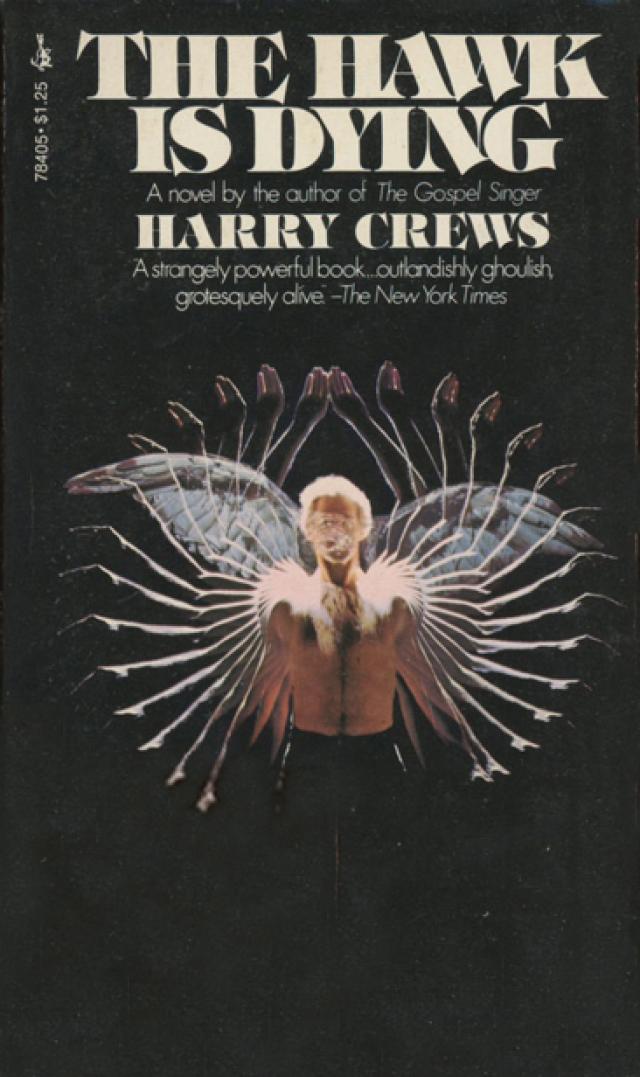
In Naked in Garden Hills, Karate Is a Thing of the Spirit, and Car, Harry Crews, with his superb novelistic gifts, wrote of the demonic and the bizarre, in what The New York Times Book Review has called a “Hieronymus Bosch landscape.” Now, in The Hawk Is Dying, he moves to a different landscape, populated by men and women who are above all ordinary, whose battle against the “nothing period” of being alive makes them at once recognizable, familiar, and real.At the heart of the book is George Gattling of Gainesville, Florida, fighting the boredom, the excruciating unimportance, of his existence. He has a successful custom-seatcover business, a $60,000 ranch-style home, a family of sorts—his sister Precious, who lies in bed reading aloud the “Ask Them Yourselves” questions in Family Weekly, her son Fred, who every now and then utters one word like “cork” or “toe” and is definitely either retarded or a genius; and Betty, a psychology major whose actual study is copulation.And he has his hawk.The hawk is the mirror for all of George’s held-in passions. It goes with him everywhere—to breakfast, to Betty’s bed, to a funeral home at four in the morning. When the hawk at last springs from his arm, prompted by the thought of freedom, swooping for its prey, life will become exciting! animated! tumultuous! . . . and George will have finally escaped the expected and the everyday entering into the immediate, where the senses are quickly awakened and emotions are unrestrained.In a story filled with scenes that are funny and touching and wonderfully bawdy, Harry Crews has captured the human spirit searching for that Supreme Something which will banish all “dead ends” forever, which will promise—virtually guarantee— the rapturous beginning of Life.
Read online
  • 279
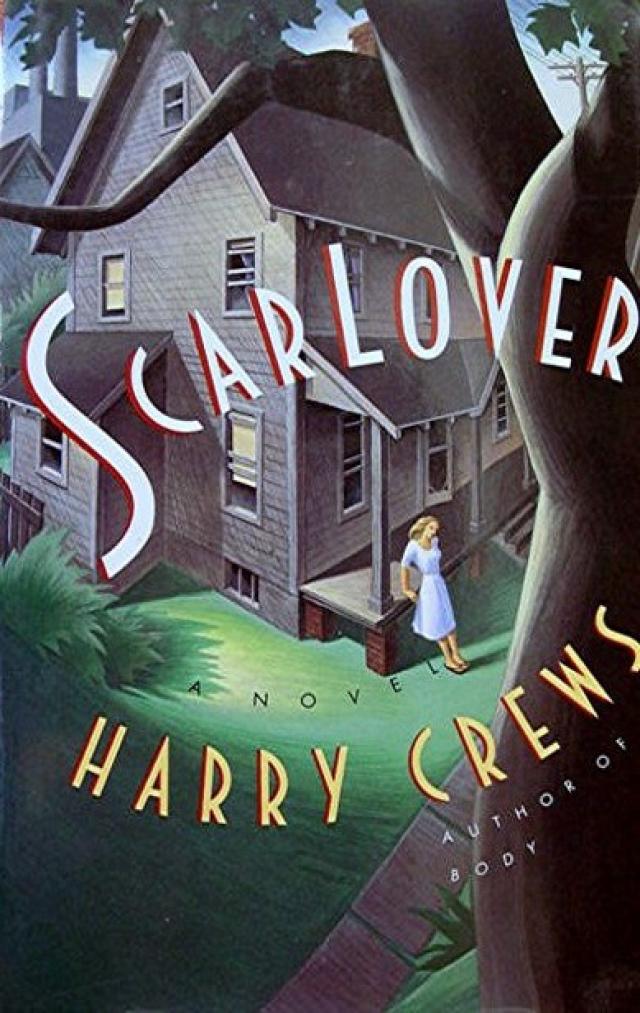
Scar Lover

Scar Lover

Harry Crews

Harry Crews

Scar Lover is a miraculous, true-to-the-bone story of love and redemption, at once a classic southern novel and purely, unmistakably, Harry Crews.Running from a past that has scarred and blamed him, and a tragic accident that has destroyed his family, Pete Butcher avoids all personal contact. Then Sarah Leemer, the oddly beautiful girl next door, walks into his life. Slowly, sweetly, and with a determination almost Faulknerian in its ferocity, Sarah pulls Pete back into life and into the ever increasing complications of love, family, death, and deliverance. For Sarah has made Pete her own, and as she takes her claim, we see the miraculous power of love without boundaries or fear."Reading a Crews novel is like watching a savage brawl on top of a derailed train careening toward a cliff!" -Miami Herald“With an effortless ear for dialect, mood and atmosphere, Harry Crews has drawn a deft portrait of tenderness with his typically savage strokes.” —Seattle Times“Pure gold, pure Harry Crews, with plenty of the grim humor and enraged charity that have become his trademark.”—The New York Times Book Review“Imagine William Faulkner in a fright wig or Carson McCullers and Flannery O’Connor strapped side by side on a roller coaster, and you have Harry Crews writing Southern gothic....Scar Lover works a wacky kind of magic.”—TimeFrom Publishers WeeklyAlthough this demented and darkly humorous tale is billed as Crews's ( Body ) "most mainstream" novel, rest assured he hasn't gotten there quite yet. Acerbic college-dropout Pete Butcher loathes himself for accidentally causing his little brother brain damage with a claw hammer, and he is haunted by the sight of the dual dents on the child's forehead. On his way to a Jacksonville, Fla., warehouse--where he works with a Rastafarian whose wife repeatedly brands him to commemorate each year they are together--Pete encounters Sarah Leemer, a handsome, mesmerizing young woman with a golfball-like lump in her breast. Against his better judgment, he and Sarah become lovers and he is welcomed into her family, which includes a mentally unhinged mother who has just had a radical mastectomy and a father who complains of a bad heart "the size of a watermelon." The suffering foursome have just achieved an uneasy peace when tragedy strikes them anew, launching its survivors into a gruesome, comical, grimly poetic night of graphic death and Rasta remedies. Pete's sudden responsibility to the Leemers serves to expiate his guilt over his brother; Crews admirably sustains his theme of disfigurement and healing, and if the finale is slightly ambiguous it still bears its author's trademark perverse twist.From Library JournalWhen Pete Butcher ends up in Jacksonville, Florida, he carries with him emotional scars from a devastated family life that cause him to recoil from the strangers he meets daily. Pete just wants to be left alone, but he has landed himself in the middle of a carnival of characters, especially Sarah Leamer, who has staked a claim to Pete. Pete is thus reluctantly drawn into her family's own tragic affairs. Through Sarah, Pete confronts life, death, and, ultimately, his own greatest scar. In the meantime, Pete befriends Burnt George, a co-worker and Rastafarian who carries his own horseshoe-shaped scars seared into his back. Crews darkly comic tale gives a disturbingly accurate portrayal of characters from the rural South, each fiercely shaped by sweat, grit, and cruel hardship. Although the plot becomes very strained at points, Scar Lover will not disappoint Crews's fans.
Read online
  • 213
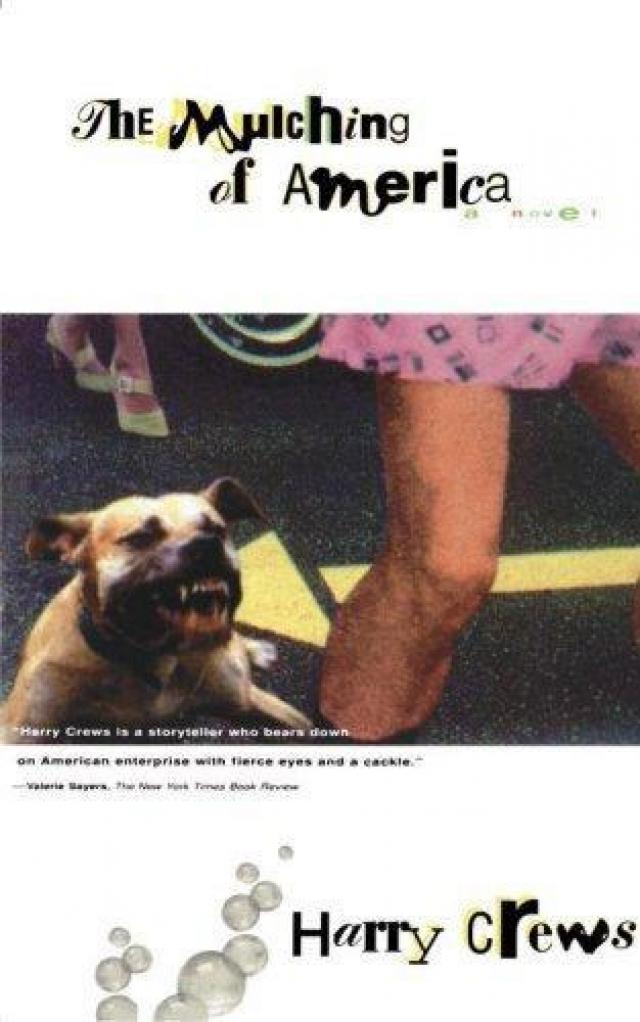
The Mulching of America

The Mulching of America

Harry Crews

Harry Crews

“As semimythic, mad-writer-guys go, only Cormac McCarthy can rival Georgia-born Harry Crews on the contemporary American scene.” –Glen Hirshberg, Seattle Weekly Hickum Looney is determined to win Soaps For Life’s annual sales contest- and this year he has an edge. Looney has found that ideal customer: the proverbial little old lady, who swallows all his patter, introduces him to all her friends, and helps him fill a record number of order books. But before he can claim the Cadillac, the trip to Disney World, and the $2,000 in cash as his own, Looney must contend with the Boss, a man who outsells his own salesmen year after year.Harry Crews turns the classic rags-to-riches story on its head in this hilarious saga of the trials and tribulations of a beleaguered salesman. “The Mulching of America is the funniest book ever written about a door-to-door soap salesman. Not just funny either. Savage. Dealing hyperbole with both hands. Harry Crews bubbles to the surface again with the sort of satire that makes Swift look slow.” -Dick Roraback, The Washington Post Book World “The Florida author has built a nineteen-book career by writing—piercingly, sympa­thetically and never, ever condescendingly—about people who are not normal in the safe, sanitary sense of the word. Crews gives them an understanding, humor­ous voice that rings like a burlesque combination of William Faulkner and Flannery O’Connor.” – Jeff Baker, Oregonian “A roller-coaster-ride of a novel, "neck deep in crazy,” … disgusting and grotesque.” – Kirkus Reviews From Library JournalTraveling salesman Hickum Looney has been toiling 25 years with the Soaps for Life Company to be the best salesman in the outfit. After one especially good day of door-to-door sales, Hickum figures he can easily win the annual Soaps for Life sales contest. But the Boss, a manic, hare-lipped figure who is part Norman Vincent Peale, part Jim Bakker, and part Adolf Hitler, has always won the contest, and he has other plans for Hickum Looney and Soaps for Life. Along the way to fame and misfortune, Hickum meets up with the typical cast of Crews's misfits: Gaye Nell Odell, a prostitute and karate expert whose ability to shoot a pistol renders one of Hickum's enemies toeless; Crews's perennial character, former bodybuilder Russell Muscle (e.g., Body, 8/90), now the Boss's masseur; and the Boss's chauffeur, Pierre LaFarge, a former convict with unconventional sexual appetites. For a brief moment after he and Gaye Nell become lovers, Hickum's flame of success flickers steadily only to be extinguished by the strong winds of the Boss's company plan. At its best, Crews's writing is a two-edged sword that slashes with its razor-thin hilarity while slicing open the underside of the New South to expose its depravity and hollowness. This novel is indeed one of his best.--Henry L. Carrigan Jr., Westerville P.L., OhioCopyright 1995 Reed Business Information, Inc.
Read online
  • 193
Body

Body

Harry Crews

Harry Crews

"Crews cracks open a southern-fried terrain that teems with heretofore unidentified life.... It's time the word got out: Harry Crews kicks ass."—The Village Voice Literary Supplement In Body Harry Crews reveals the beauty in the grotesque and the grotesque in the beautiful, mixing the hard and the soft, the brutal and the kind, the drive for physical perfection and the compromise of real love. Bodybuilder-trainer Russell "Muscle" Morgan transforms Dorothy Turnipseed, a secretary from Waycross, Georgia, into Shereel Dupont, a paragon of physical perfection and leading contender in the Ms. Cosmos contest—a being for whom winning is everything. But, though she can control everything about her body, she can't control her family. The corpulent, redneck Turnipseeds arrive uninvited at the contest and upset the careful balance that keeps Shereel's world—the high-tension world of bodybuilding— intact. Hilariously funny, gritty, powerful, and profound. Body is Crews's best novel yet."Raunchy and perverse and wildly funny..."—Washington Post Book World"Uproarious.... It stands with his best works."—Los Angeles Times Book Review"Savagely funny and deadly serious.... [Crews's] characters, distinctive and genuine, muscle his story right through its no-holds-barred ending."—Publishers WeeklyHarry Crews is the author of eleven novels, four books of nonfiction, and numerous magazine articles. He lives in Gainesville, Florida, where he teaches at the University of Florida.
Read online
  • 191
183